




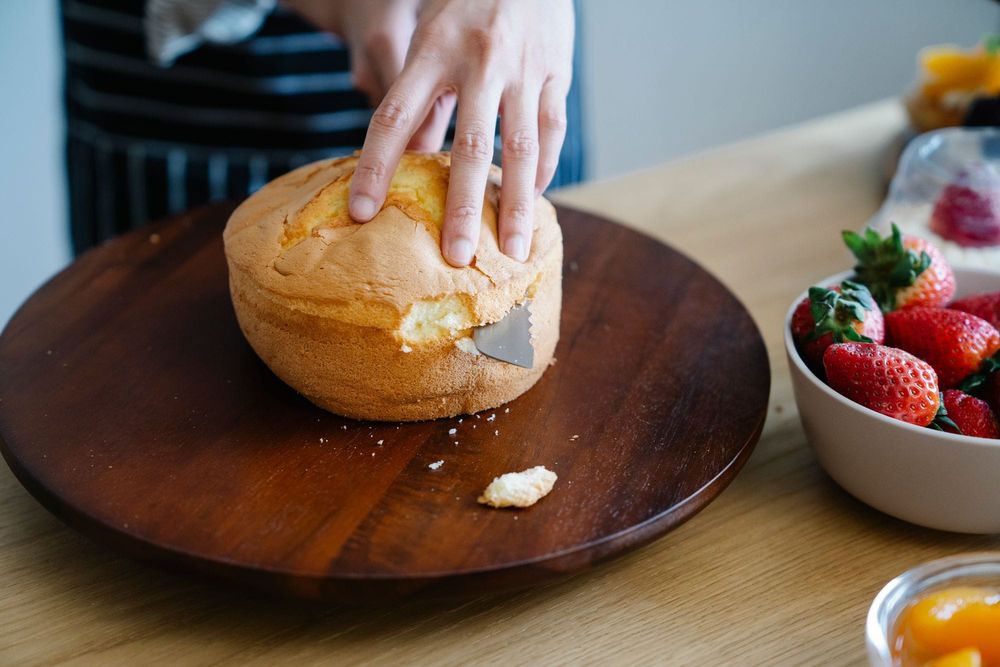
Anyone who grew up sharing dessert knows the rule: one person cuts, the other chooses. It needs no referee. The cutter has every reason to make the pieces equal, because the cutter gets whatever piece is left.
Drawing congressional districts has no such rule. In most states, the people who draw the map are the people who will run on it, and their party gets first choice. On November 3, 2026, Americans elected a new House of Representatives. In several states, voters cast their ballots inside district lines that had been redrawn only months earlier, in the middle of the decade, for openly partisan reasons.
This post answers one question: why didn't federal judges stop any of it? The short answer is a 5-4 decision from June 27, 2019, Rucho v. Common Cause (2019). It held that claims of partisan gerrymandering are not something federal courts can decide. The longer answer explains why the recent map fights looked the way they did, and where the remaining referees now sit.
The maps behind this week's results
Gerrymandering means drawing district lines to give one side an advantage. Maps are normally redrawn once a decade, after the census. What set the 2026 cycle apart was the mid-decade redraw. In the summer of 2025, Texas Republicans passed a new congressional map designed to add up to five Republican seats. Democratic legislators left the state for a time to deny the quorum needed to pass it. California answered in November 2025, when voters approved Proposition 50. The measure set aside the maps drawn by the state's independent commission and put in place legislature-drawn maps meant to offset the Texas gains. Republicans in Missouri and North Carolina redrew their maps in the fall of 2025 to target Democratic-held seats. In all, ten states adopted new congressional maps outside the usual once-a-decade cycle. Eight of those maps, in Texas, California, North Carolina, Ohio, Utah, Florida, Tennessee and Louisiana, are in force for the November 2026 election. Missouri's map is on hold until voters decide on it in a November referendum, and Virginia's never took effect after the state supreme court struck down the constitutional amendment it depended on.
Look at what the lawsuits against these maps argued. Challengers to the Texas map said it diluted the votes of Black and Latino voters. That is a claim about race. In November 2025, a three-judge federal court in El Paso blocked the map, finding that it likely sorted voters by race. On December 4, 2025, the Supreme Court put that ruling on hold by a 6-3 vote, which let Texas use the map in 2026, and in April 2026 it reversed the lower court's decision. The obvious complaint, that a map was drawn to help one party, was mostly missing from federal court. After Rucho, that argument has nowhere to go there.
The two maps the Court reviewed in 2019
Rucho reached the Court alongside a companion case, Lamone v. Benisek (2019), and the pairing mattered. One map favoured Republicans and the other favoured Democrats. Whatever rule the Court announced would cut both ways.
North Carolina's Republican-controlled legislature drew its 2016 congressional map after a federal court struck down the previous one as a racial gerrymander. The lawmakers were unusually frank about their goal. They adopted partisan advantage as an official criterion. A leading legislator explained that the plan was built to elect 10 Republicans and 3 Democrats, because he did not think a map electing 11 Republicans was possible. In the 2016 election, Republicans won 10 of the state's 13 seats.
In Maryland, Democrats redrew the Sixth District in 2011, moving Republican voters out and Democratic voters in. The district, held by a Republican for nearly two decades, elected a Democrat in 2012.
Lower federal courts found both maps unconstitutional. The challengers relied on three parts of the Constitution. The first was the First Amendment, on the theory that the maps punished voters for their political association. The second was the Equal Protection Clause of the Fourteenth Amendment. The third was the Elections Clause of Article I, which lets state legislatures set the "Times, Places and Manner" of congressional elections, subject to laws passed by Congress.
What the Court decided
Chief Justice John Roberts wrote for the majority, joined by Justices Thomas, Alito, Gorsuch and Kavanaugh. The ruling rested on the political question doctrine. Under that doctrine, some disputes belong to the elected branches, either because the Constitution assigns them there or because judges have no workable standard for deciding them.
Courts had entered districting before. Baker v. Carr (1962) held that unequal district populations could be challenged in federal court. Reynolds v. Sims (1964) then set the rule of one person, one vote. Roberts's point was that population is something a judge can count. Partisan fairness is not. Fair to whom? The Constitution does not require that a party's share of seats match its share of votes. If some partisanship in districting is allowed, and the majority said it always has been, then a court has to decide how much is too much. The majority found no limited, precise and politically neutral way to do that.
The Court had circled this problem for decades. Davis v. Bandemer (1986) said partisan gerrymandering claims could be heard, but it never produced a usable test. In Vieth v. Jubelirer (2004), a plurality would have closed the door, while Justice Kennedy kept it open in case a standard emerged. Gill v. Whitford (2018) sent a Wisconsin challenge back on standing grounds without reaching the merits. Rucho ended the search: partisan gerrymandering claims present political questions beyond the reach of the federal courts.
The majority did not call partisan gerrymandering fair. Roberts acknowledged that excessive partisanship can produce results that reasonably seem unjust. His remedy was to point elsewhere: to state constitutions, state courts, independent commissions and Congress. Federal courts still police population equality and racial discrimination in districting. They just won't police party.
The dissent's answer
Justice Elena Kagan wrote for the four dissenters, joined by Justices Ginsburg, Breyer and Sotomayor. She argued that these gerrymanders were extreme and that they deprived citizens of basic rights to participate equally in self-government.
Her central reply was practical. Lower courts, she argued, had already converged on a workable test. A challenger would have to show that the mapmakers intended to entrench their party, that the map had a large effect, and that no legitimate reason explained it. The evidence could come from computers. Experts could generate thousands of alternative maps using the state's own neutral criteria, such as compact districts and intact counties. If the enacted map was an extreme outlier among them, partisanship explained it. The same technology that lets mapmakers draw precise gerrymanders, Kagan argued, lets courts measure them.
She also questioned the majority's alternatives. Many states have no citizen ballot initiative. And legislators who win under a map have little reason to reform it.
A problem of who holds the knife
We usually think of gerrymandering as a map problem, about odd shapes and split towns. Look at it as a cooperation problem instead. Game theorists call one version of it a prisoner's dilemma. Each player does better by defecting, whatever the other side does, yet both end up worse off than if they had cooperated. If every state drew neutral maps, neither party would lose much ground overall. But a state that disarms on its own hands the other party an advantage everywhere else.
Cooperation games like this usually need an enforcer, someone outside the game who can make restraint safe. At the federal level, Rucho took judges out of that role. What remains is retaliation, and 2025 showed it in action. Texas moved and California answered, with other states lining up behind each. The Court had already said in League of United Latin American Citizens v. Perry (2006), a case about Texas's 2003 redraw, that the Constitution does not forbid redrawing in the middle of a decade. So there was no timing rule to slow things down either.
Where the referees went
Some of the referees the majority pointed to were already at work. In 2018, the Pennsylvania Supreme Court struck down that state's congressional map under the state constitution's guarantee of free and equal elections, in League of Women Voters v. Commonwealth. Florida voters had added anti-gerrymandering rules to their constitution in 2010. In Arizona State Legislature v. Arizona Independent Redistricting Commission (2015), the Court allowed voters to hand congressional mapmaking to an independent commission.
State courts are only as durable as their membership. In Harper v. Hall, the North Carolina Supreme Court struck down the state's congressional map in 2022 as a partisan gerrymander under the state constitution. After elections changed the court's majority, it reversed itself in 2023 and held that such claims could not be heard in state court. The Supreme Court nonetheless decided the federal version of that case, Moore v. Harper (2023). It rejected the argument that the Elections Clause frees state legislatures from review by their own state courts, while warning that state courts may not go beyond the ordinary bounds of judicial review. Commissions can also be undone by the voters who created them, as California's Proposition 50 showed.
What's changed since 2019
The biggest change came through race cases. In Alexander v. South Carolina State Conference of the NAACP (2024), the Court told lower courts to presume that legislatures act in good faith. It also required challengers to separate the role of race from the role of party. Because Rucho made partisan motives legally safe, "we were drawing for party, not race" became a strong defense. In many places, race and party voting patterns closely overlap.
The Voting Rights Act is the other remaining federal check, and the Court revisited it in Louisiana v. Callais (2026). On April 29, 2026, in a 6-3 opinion by Justice Alito, the Court held that Louisiana's map, which had added a second majority-Black district, was an unconstitutional racial gerrymander because Section 2 had not required that district. It also tightened the test challengers must meet to prove a Section 2 claim. One reason it gave was Rucho itself: with party claims closed off, the Court worried that litigants would recast partisan complaints as racial ones. Congress has considered national redistricting standards, including independent commissions, and members introduced the Redistricting Reform Act of 2025 to ban mid-decade redraws, but as of mid-October 2026 none of these proposals had become law.
Why it matters now
The cake rule works because the person cutting cannot also choose. Rucho means that, for federal law, the person cutting can choose. The only limits are population, race and whatever a state's own constitution and voters impose. So the referee you get depends on your address. Some states have ballot initiatives, independent commissions or state courts willing to apply their constitutions. Others have only the legislature, which is the party holding the knife. The next census arrives in 2030, and the 2025 redraws suggest the maps may not wait that long. The rules that will govern those maps are being written now, state by state, in legislatures, courts and ballot measures.
Sources
- Rucho v. Common Cause, Etalia SCOTUS research page
- Supreme Court Database: decision date (June 27, 2019), vote (5-4) and issue area (Civil Rights) for Rucho v. Common Cause