




The House elected in November 2026 was chosen partly inside maps redrawn mid-decade for partisan advantage. A 5-4 ruling from 2019, Rucho v. Common Cause, explains why federal judges stayed out and who can still check partisan maps.
SCOTUS
When a race is closer than the counting tools can measure, someone has to decide what a vote is. Here's what the Supreme Court decided in Bush v. Gore, why it called the ruling limited, and how lawyers still use it.
SCOTUS
The Constitution gives Congress the power to set tariffs. Since 1890, Congress has lent it to the president again and again. Here are the Supreme Court cases that explain today's fight over who sets America's tariffs.
SCOTUS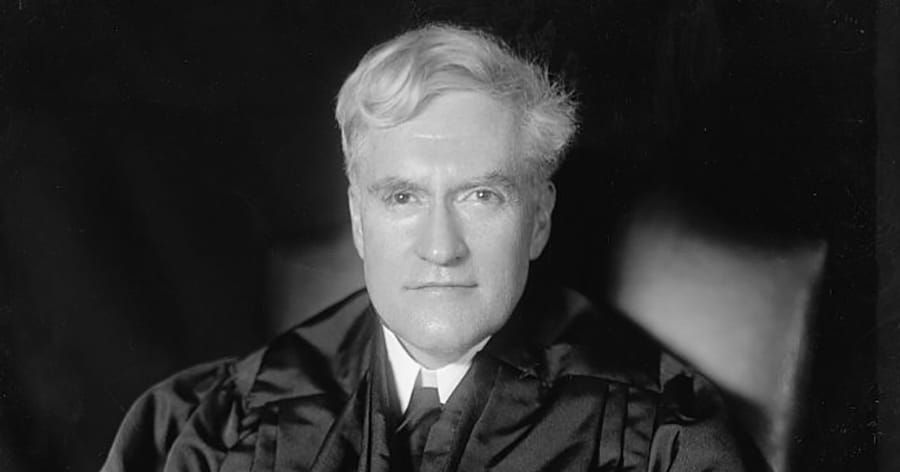
From the Texas white primary to Social Security: five Cardozo opinions, four for the Court and one a lone dissent.
SCOTUS
Reno, Packingham, Moody v. NetChoice and Free Speech Coalition v. Paxton: how the Court has applied the First Amendment online.
First Amendment
The Court has rarely needed the ban on quartering soldiers. Four cases show how justices have used it, from the steel seizure to Laird v. Tatum.
Amendment Series
Roth, Stanley, Miller, Paris Adult Theatre and Ashcroft: how the Court has defined obscenity and where it stops.
SCOTUS
From Mapp to Carpenter: how the Court has applied the ban on unreasonable searches to evidence, phone booths, stops, phones and location records.
Amendment Series
From Chy Lung in 1876 to Arizona in 2012: who controls immigration, who is a citizen, and what states cannot do.
SCOTUS
From Gideon to Crawford: how the Court decided who gets a lawyer, how long a trial can wait, and who the accused may face.
Amendment Series
Separate ballots for President and Vice President were the 1804 fix. Four cases show what the amendment leaves to the states, the parties and Congress.
Amendment Series
Cruikshank, Heller, McDonald, Bruen and Rahimi: how the Court went from a limit on Congress to a history test for gun laws.
SCOTUS